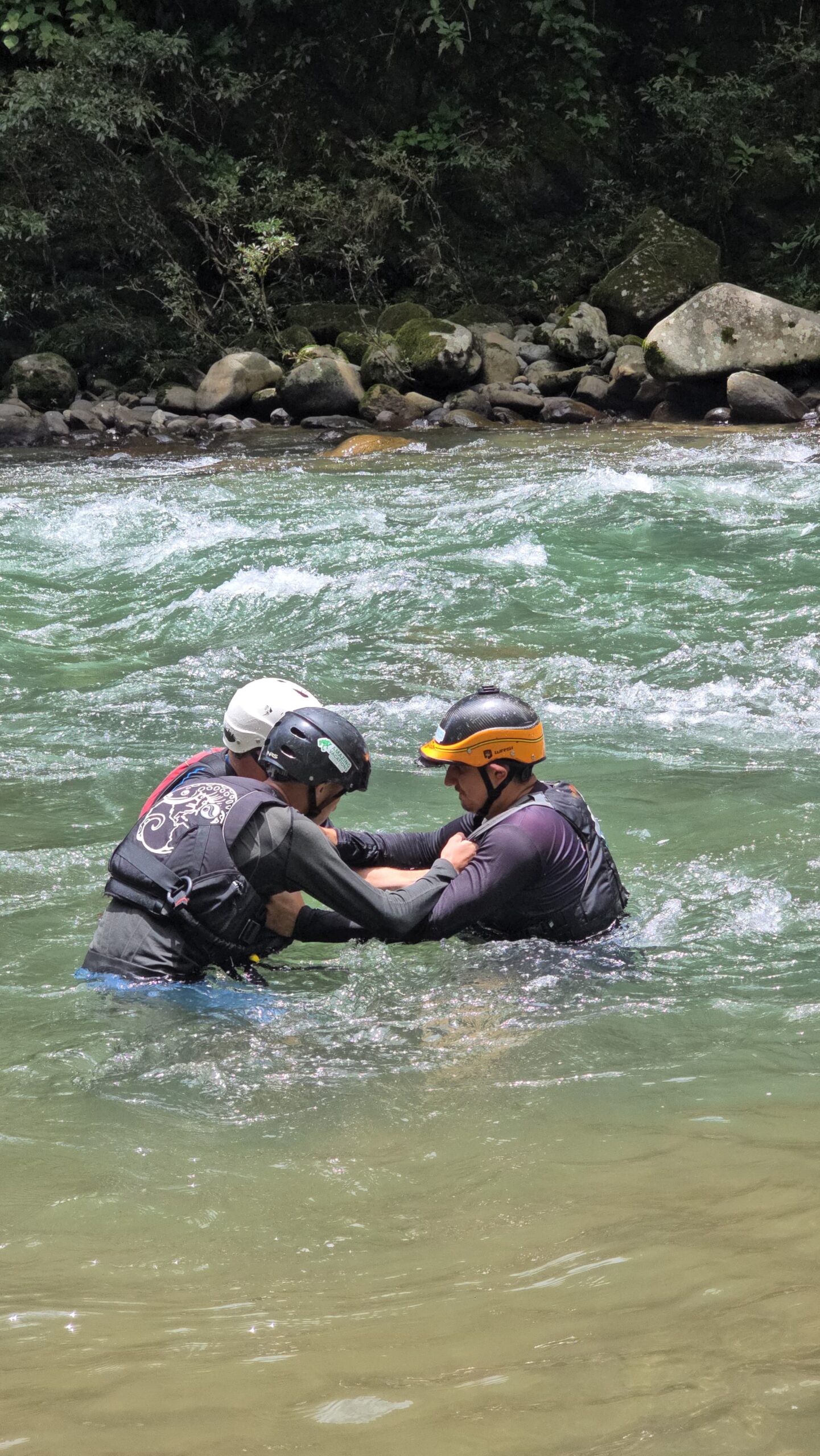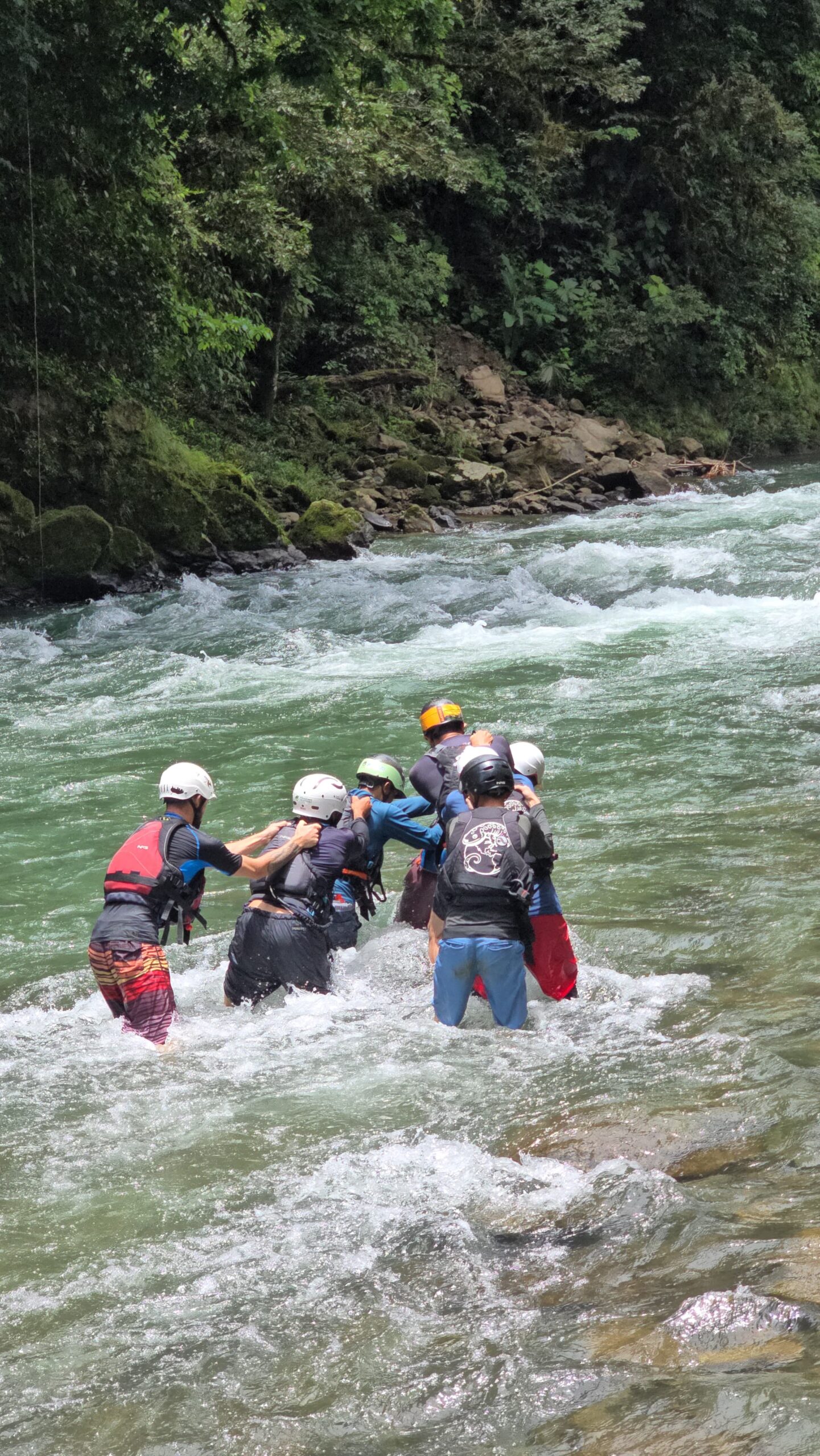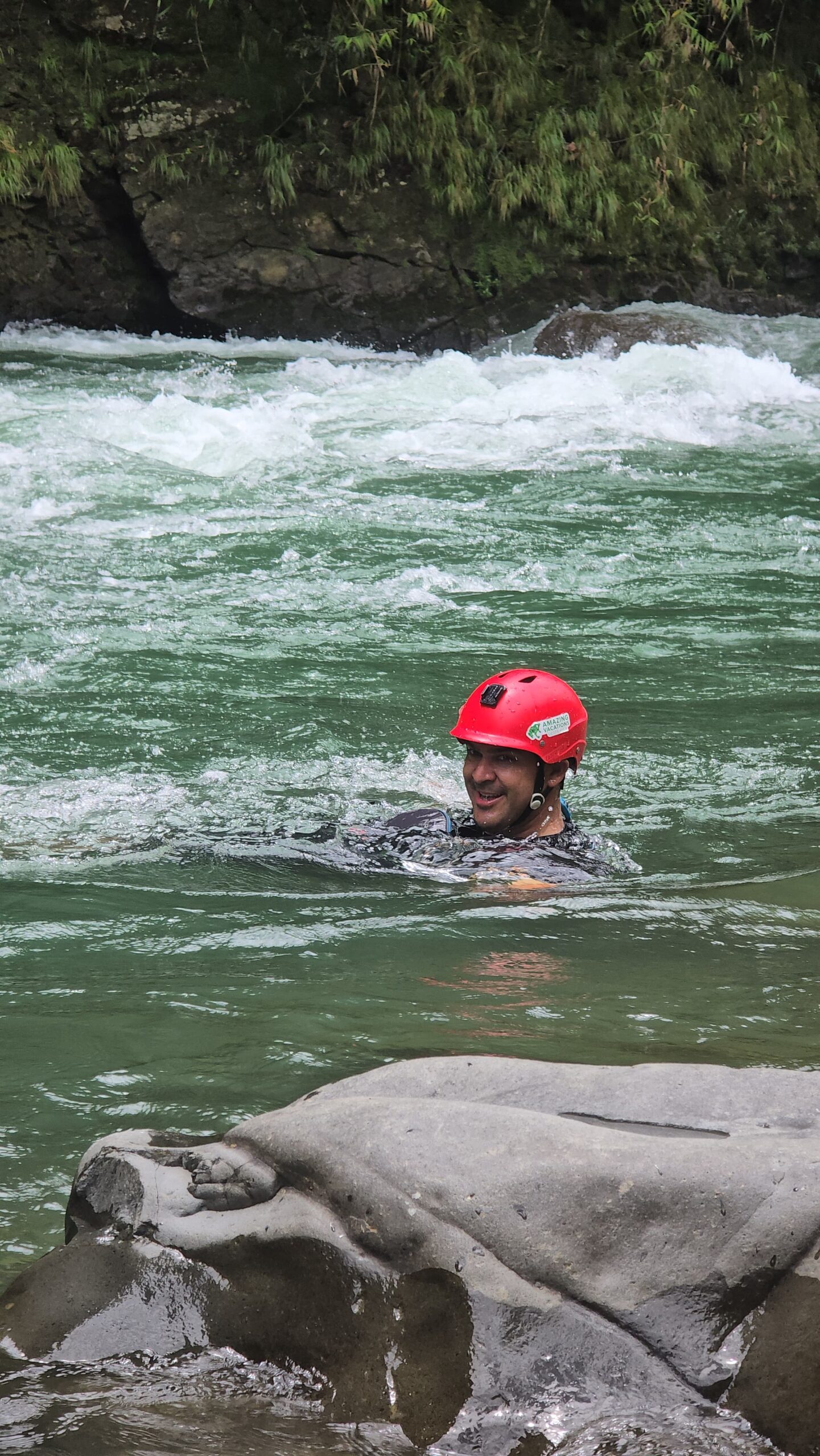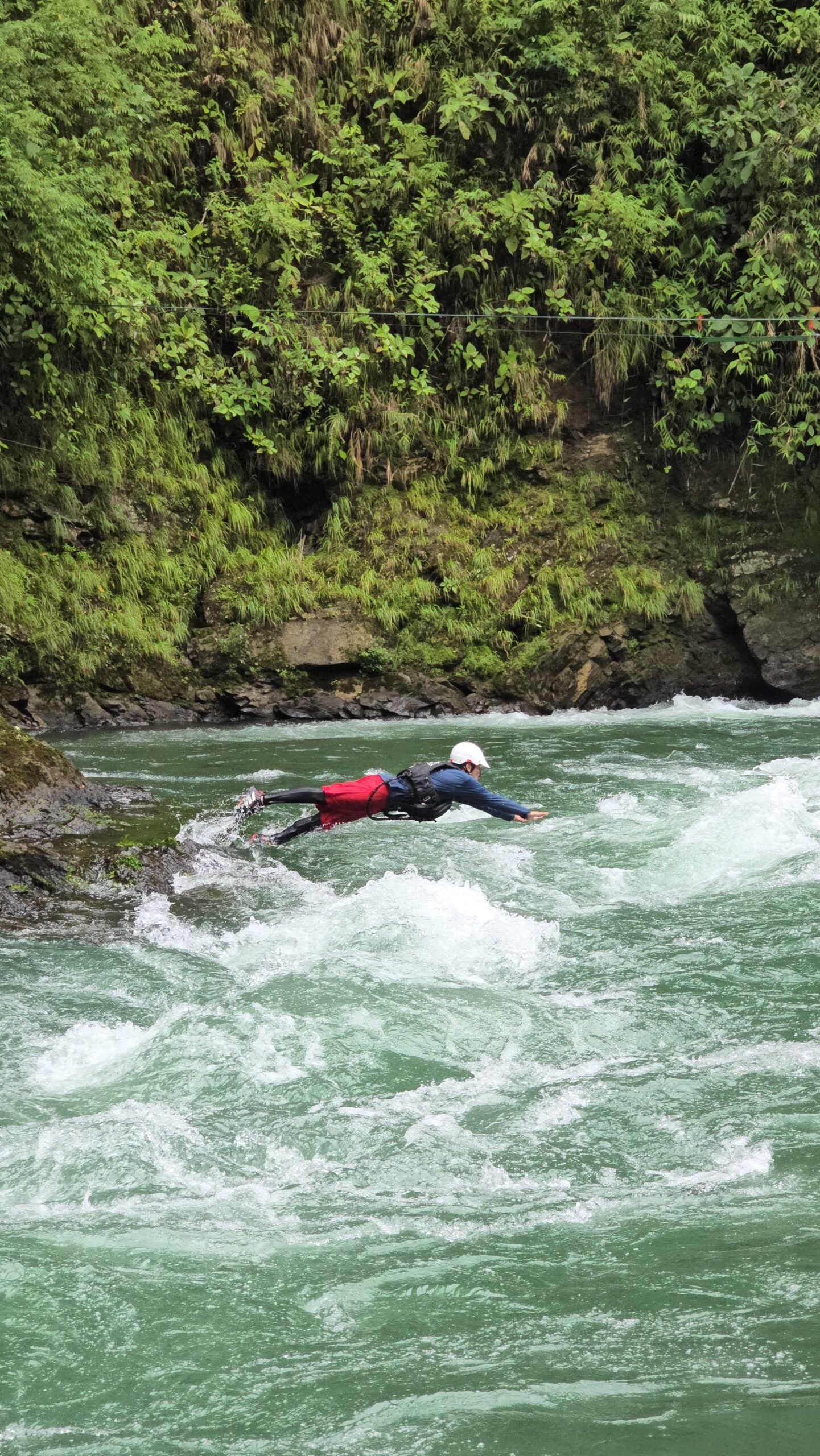
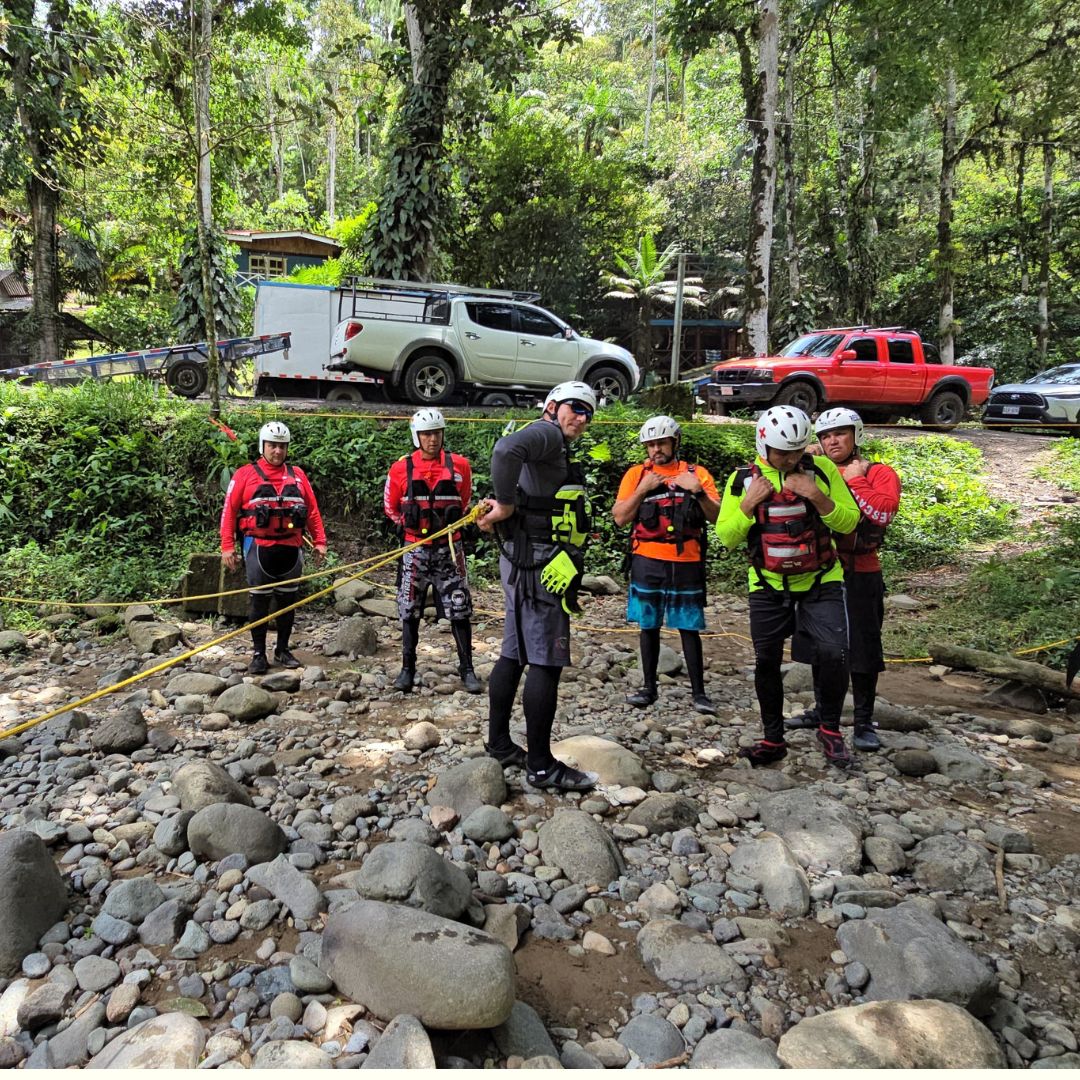
Swiftwater Rescue Workshop

Our comprehensive Swiftwater Rescue Workshop equips participants with essential skills to navigate and respond effectively in dynamic river environments. Whether you're a paddler, guide, or outdoor enthusiast, this training ensures confidence in swiftwater safety, self-rescue techniques, and emergency scenarios.

Difficulty

Beginner to Intermediate

Duration

8 hours

Locations

Pacuare & Pejivalle Rivers

Module 1: Understanding Swiftwater Environments

This module lays the foundation of river safety, ensuring participants can assess risks, understand hydrology, and recognize hazards before engaging in rescue scenarios.

Key Concepts: 

  • River Hydrodynamics 
  • Hazards Identification Strainers, hydraulics, holes, undercut rocks, and their dangers 
  • Weather & River Conditions Reading forecasts and understanding seasonal changes 
  • Risk Assessment & Decision-Making – Evaluating rapid difficulty levels and objective vs. subjective hazards

Module 2: Personal Safety & Self-Rescue

Before rescuing others, participants must develop their own survival skills in swiftwater environments.

Key Concepts: 

  • Defensive Swimming Techniques – Body positioning to minimize risk when caught in rapids 
  • Aggressive Swimming Strategies – Moving efficiently to escape hazards 
  • Strainer Escape Tactics – Climbing over obstacles vs. avoiding entrapment
  • PFD, Helmet & Protective Gear Mastery – Proper fit, function, and real-world applications

Module 3: Throw Rope & Equipment Handling

Rescue tools & techniques are crucial for successful swimmer recovery.

Key Concepts: 

  • Throw Rope Mechanics – Choosing the right rope, techniques for accuracy, and retrieval methods 
    Carabiners & Webbing Usage – Secure attachment points and basic knots 
  • Prusik Loops & Pulley Systems – Setting up anchors and mechanical advantage for extractions 
  • Communication During Rescues – Hand signals, whistle codes, and verbal coordination

Module 4: Rescue Scenario Training

This hands-on module focuses on applying skills in live simulations to enhance response effectiveness.

Key Concepts: 

  • Team-Based Rescues – Coordinating swimmer extractions with multiple rescuers 
  • Pinned Boat Recovery – Using vector pulls and stabilization techniques 
    Entrapment Rescue Strategies – Freeing trapped individuals using controlled methods 
  • Emergency Action Planning – Developing real-world float plans and responding under pressure